Alternative Protein Comeback?
Encouraging patterns emerging — after 30 brutal months, sovereign strategies from Japan, Ireland, the Netherlands, Germany, the EU and China are pulling alternative proteins back to the centre of the bioeconomy transition.
The last 30 months or so have been brutal for the alternative protein and food-tech industry. Despite overall growing trends towards a shift that is kinder to the planet, there has been paranoia among capital owners (more than capital allocators) about the space, heated valuations, and redirection of all venture capital to artificial intelligence.
Claire and I believed that alternative proteins, no matter what, would need to make a comeback if we were serious about the transition. It is not possible to decarbonize or reduce the past, present, and future footprints of human impact on the planet without changing the way we produce not only food but also materials, personal care products, and pharmaceuticals. We need to change and challenge the way we produce everything, and it is not just a consumer-sentiment issue; by and large, consumers are conscious of their actions.
But for this we need commitment from private capital owners, states, and sovereign wealth funds to have a long view — at least 10-30 years — grounded in resilience, food security, and tackling changing climate conditions, which hurts how much calories and proteins we can produce. We need to find the most sustainable ways to produce, but the way of production also needs to be rooted in biology and nature. I say biology because many food activists and environmentalists conflate biotech with something unnatural; it is not.
"It is biological time risk. This is the risk that a productive biological system has already entered a phase of decline, but the financial system has not yet noticed because the final commercial shortage has not yet appeared on the procurement desk. … Capital can buy many things. It cannot compress biological time."
Everything we eat today, in some ways, has been designed by humans to meet human caloric and nutritional needs. Our generation thinks we are the only ones tinkering with nature to grow food and produce materials. That is factually and objectively untrue; all our past civilizations, our ancestors, worked hard to find ways to make crops more resilient, increase yields, and make our bananas seedless. Our ancestors were the original bioengineers. They practiced selective breeding to transform wild grasses into staple crops like wheat and corn. They even engineered convenience into nature itself, creating the seedless bananas and watermelons we take for granted.
Now we are moving from field to cells and breeding to brewing. This shift towards a food system built on precision fermentation, cellular cultivation, and molecular farming is not a rejection of our agricultural past, but an evolution — a revolution compelled by necessity and enabled by unprecedented understanding.
There is so much fear in the air surrounding terms like "GMO" and "lab-grown food." This fear is understandable but ultimately misplaced. We must reframe the conversation: virtually everything we eat today is the product of genetic modification, achieved through centuries of selective breeding. The question is not if we should modify our food, but how we do it. We should actively promote the next generation of ethical genetic engineering — techniques that are more precise, controlled, and transparent than the blunt instrument of historical breeding.
We are not creating artificial life; we are harnessing the innate power of yeast, microbes, and animal cells — the same biological forces that have always existed — and providing them with a clean, controlled environment. This represents the ultimate humane food, eliminating industrial animal agriculture and moving from factory farms to food factories. It is a deeply decarbonizing and regenerative path, one that could allow us to rewild billions of acres of farmland, transforming food production from the planet's most significant source of greenhouse gas emissions into a tool for its regeneration.
We are seeing, from China to Japan to the EU (Germany, Ireland), thoughtful contemplation on the alternative protein strategy, wrapped up with focus areas like food security, resilience, and bioeconomy.
Japan
Japan has unveiled a draft roadmap to invest about $60 billion USD in food technology by 2040 as part of a broader strategy to strengthen its economy and food security, with ¥1T ($6.2B) allocated to new foods. The plan focuses on four key areas: indoor farming, land-based aquaculture, food machinery, and new foods, with indoor farming receiving the largest share of funding. Overall, the government aims to drive more than ¥370 trillion in combined public and private investment across 17 strategic industries by 2040.
Further reading: Green Queen — https://www.greenqueen.com.hk/japan-growth-strategy-public-private-investment-roadmap-new-foods/
Ireland
Ireland takes over the Presidency of the Council of the EU, with a commitment to reinforcing EU resilience in emerging sectors such as biotechnology. Over the next six months, Ireland will guide the Council's work and legislative priorities — including discussions around the first EU Biotech Act and the next EU Framework Program for Research and Innovation (FP10). According to GFI's latest analysis, the country has ranked among Europe's top 10 nations in alternative protein research every year since 2020.
Netherlands
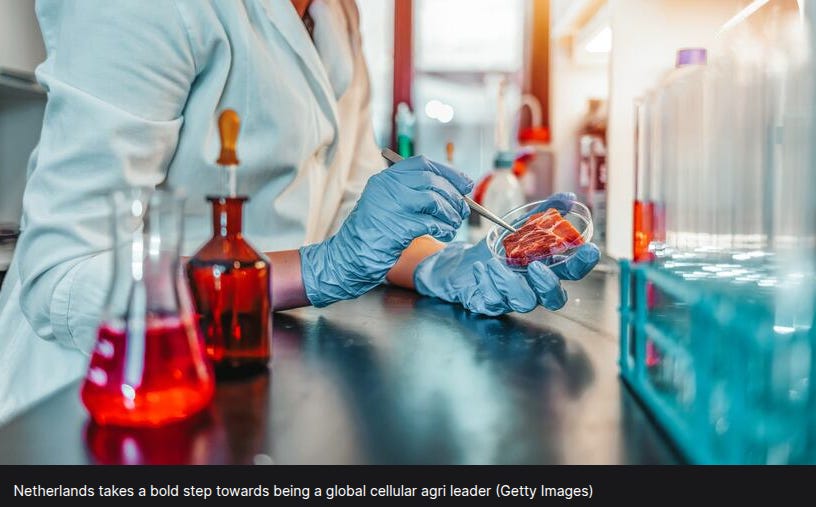
The Netherlands is cementing its position as a global leader in foodtech by heavily investing in open-access scale-up facilities and public research. This strategy aims to shift the retail market away from traditional animal proteins toward plant-based alternatives and cellular agriculture. The country remains the only EU nation to have authorized public tastings of cultivated meat and actively opposes proposed EU-wide bans on lab-grown proteins.
Germany
The German government sets a new ambition for low-emission alternative proteins produced through food biotech: to establish a business-driven innovation ecosystem and to launch products made in Germany on the world market by 2028. Germany has one of Europe's strongest research bases in alternative proteins. Read the full Germany Biotechnology Roadmap: https://hightech-agenda-deutschland.de/roadmaps/biotechnologie/
EU-wide
The European Commission has published its long-awaited EU Protein Plan. The plan acknowledges the importance of plant proteins for Europe's future food security, resilience, autonomy, competitiveness, public health, and climate goals. For more, see the European Vegetarian Union cover: https://www.euroveg.eu/eu-protein-plan/
On 10 June 2026, the Commission launched three new initiatives to support the marketability of bio-based products:
- the Bio-based Europe Alliance (BEA) to support market scale-up,
- the Bioeconomy Investment Deployment Group (BIDG) to improve access to finance,
- and the Expert Group on Bioeconomy to support implementation by Member States.
Europe must step up its commitment to the bioeconomy, and we at Beyond Impact VC are committed to the bioeconomy, as we believe the transition to bio solutions would lead to a kinder, cleaner, healthier world — not just for humans but also for nature at large.
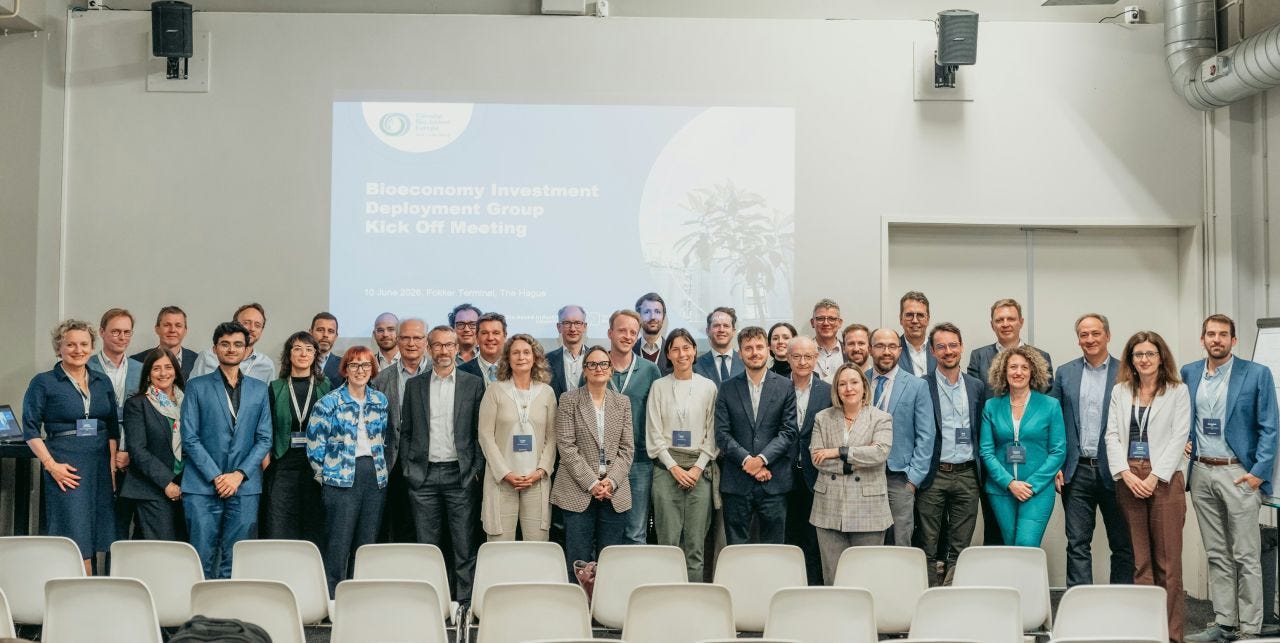
We are proud backers of several bio solutions. Claire Smith, my colleague and founder of Beyond Impact VC, represented us at the first meeting of the Bioeconomy Investment Development Group, to which we were handpicked. Learn more from the Circular Bio-based Europe Joint Undertaking: https://www.cbe.europa.eu/news/mobilising-finance-scale-europes-bio-based-sector
China
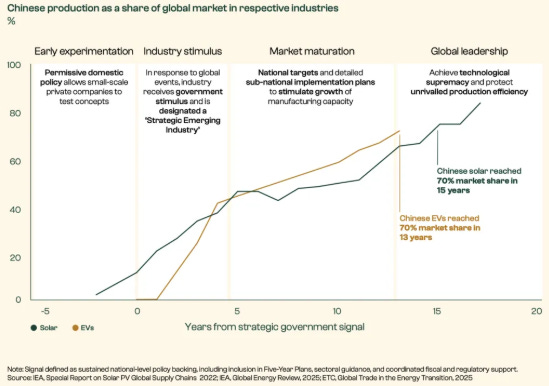
Other regional protein strategies, with China leading, maximize production across all protein pathways. They reinforce innovation in fermentation to supply protein across the full agri-food chain, including healthier and more sustainable food for citizens. There is strong recognition that only through strength across diversity can food security be achieved. China is pursuing an 'all-of-the-above' protein strategy, investing heavily in fermentation, recognizing that food security means sovereignty over biological manufacturing.
According to analyses by institutions such as the Stockholm Resilience Center and Nature, the system is buckling under its own weight. Food production alone exceeds planetary boundaries; globalizing the Western diet would require three to five Earths.
The journey from engineering seedless bananas to brewing proteins is a continuous arc of human innovation. The objective facts paint a clear picture: the old system is unsustainable and on the verge of collapse. The new narrative is one of hope, built on a better understanding of life's building blocks — a story of building a food system that is not only kinder and cleaner but also in true harmony with the natural world it depends on.

The bioeconomy transition is reaching almost every sector and industry. But a critical issue is that extractive industries — such as petrochemicals, animal agriculture, and forestry — are built on a long history of government protection and subsidies. Many have become monopolies that disregard environmental costs, thereby keeping the prices of products such as chemical fertilizers, animal-sourced proteins, and materials artificially low. This means that a 1-to-1 comparison makes bio-based solutions seem outrageously expensive.
Systemic change generates significant economic returns, but it takes patience. When short-term capital retreats, long-term sovereign and patient capital must step forward; we believe this is exactly the right time to support the sector and accelerate the transition to a kinder, cleaner, and healthier world.
Our conviction at Beyond Impact is further strengthened by structural shifts across Europe, especially Northern Europe, particularly in the Nordics and the Netherlands. Helsinki's landmark plan to halve meat and dairy procurement by 2030 is one example of the growing political commitment to decouple public procurement from high-emission animal agriculture.
In Service of Humanity, Sagar Tandon, Partner, Beyond Impact.